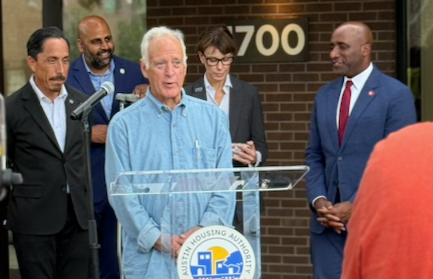

Austin Housing Authority Marketing and Communications Intern Amari Smith reflects on the history of Rosewood Courts and the community traditions that continue to make the property meaningful.
With the redeveloped Rosewood Courts now open, families are beginning a new chapter at a property that has been part of East Austin for generations.
I had the opportunity to learn more about that history this summer as Austin Housing Authority’s Marketing and Communications Intern. One experience helped bring it all together for me: attending Austin’s annual Juneteenth parade in East Austin.
Juneteenth has been part of my life for as long as I can remember. As a little girl, I watched and participated in the festivities with my family. I saw people of all races and backgrounds come together to celebrate Black heritage.
This summer, I experienced that family tradition from a new perspective. I began to understand that Rosewood Courts was not simply located near the celebration. The property is connected to Austin’s Juneteenth history.
A Celebration Rooted in Community
Juneteenth National Independence Day commemorates June 19, 1865, when Union troops arrived in Galveston, Texas, and announced the enforcement of freedom for more than 250,000 enslaved people across the state.
Although Juneteenth was not recognized as a federal holiday until 2021, families and communities across Texas have celebrated it for generations.
Before Rosewood Courts opened in 1939, part of the site was home to Emancipation Park, an important gathering place for Austin’s early Juneteenth celebrations. After the park’s land was repurposed, nearby Rosewood Park continued to serve as a significant gathering place for Austin’s Black community.
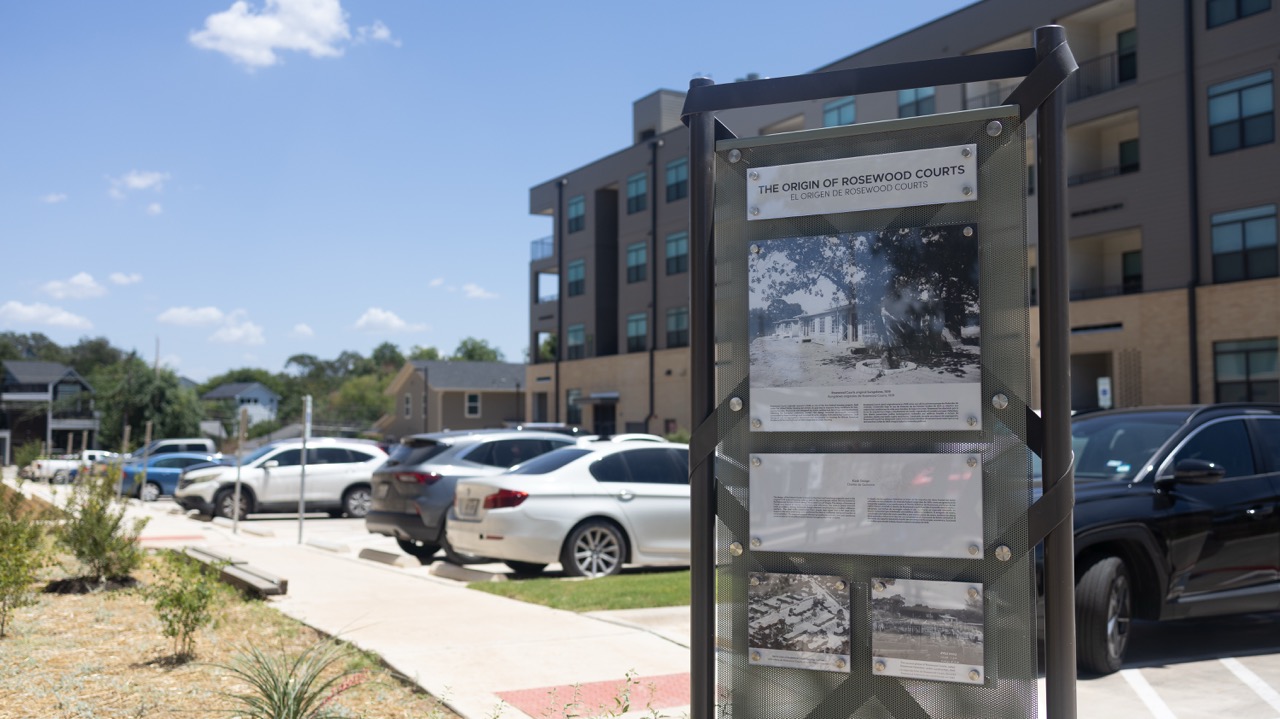
Today, displays at Rosewood Courts share the history of Emancipation Park and help keep its connection to Juneteenth alive.
Three Ways to Connect With Rosewood’s History and Community
1. Learn the Significance
Take time to learn about the history of Rosewood Courts and educate others. Go beyond simply knowing the name of the property.
Before Rosewood Courts was built, part of the site was home to Emancipation Park, an important gathering place for Austin’s early Juneteenth celebrations. The historical displays at the renovated property offer another way to learn about the people, traditions and experiences connected to the site.
This summer, I also visited an exhibit at the George Washington Carver Museum called Seeing Further. The exhibit’s layered expressions of Black lineage and liberation made me want to learn more about the history of Rosewood and East Austin.
2. Engage With the Community
Honor Rosewood’s history by participating in the community surrounding it.
There are events throughout East Austin that include educational opportunities, remembrance ceremonies, celebrations, and more. Each one provides an opportunity to meet people, learn something new, and experience the community. The W.O.W. Center at Rosewood Courts, in partnership with E4Youth, will offer another place for people to learn about East Austin’s history, experience its culture, and connect with the community.
3. Have Fun and Connect With Others
Remember to soak in the atmosphere and connect with the people around you.
My favorite part of Juneteenth is going to Rosewood and meeting new people. When I attended two years ago, I even had the opportunity to ride on the back of a cool motorcycle.
That sense of connection is what makes Juneteenth and the Rosewood community so special to me.