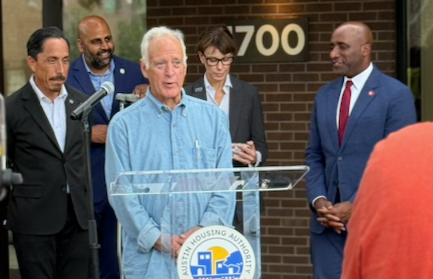
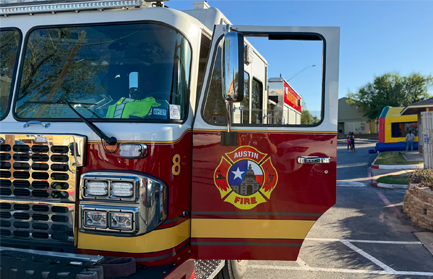
October is Fire Prevention Month- an opportunity to learn how to prevent fires, prepare for emergencies, and protect the people who matter most. The Austin Housing Authority (AHA) encourages all residents to take time this month to review fire safety practices. This year’s national campaign “Charge Into Fire Safety. Safe Charging Is a Superpower”, focuses on lithium-ion battery safety and charging habits, so let’s look at some steps to help you keep your home and loved ones safe.
1. USE ELECTRONICS SAFELY
Rechargeable lithium-ion batteries power many of the devices we use every day. When these batteries are damaged, overheated, or charged incorrectly, they can catch fire. Safe charging habits are especially important for all electronic devices, such as phones, laptops, tablets, and even power tools.
Best practices for residents:
- Use the correct charger. Choose the charger recommended by the device manufacture or one specifically approved for your device.
- Charge devices on hard and flat surfaces. A desk or table allows heat to escape more easily than a bed, pillow or couch.
- Keep charging devices away from flammable materials. Avoid charging next to blankets, curtains, paper, or other items that can catch fire.
- Inspect batteries and devices. Stop using and charging device if its battery is swollen, leaking, unusually hot, visibly damaged, or if it produces a usual odor or sound.
2. PRACTICE SAFE COOKING
Cooking is one of the leading causes of home fires. A meal can quickly become dangerous if food is left unattended or flammable items are too close to a hot stove.
Best practices for residents:
- Stay in the kitchen while cooking. If you need to leave, even briefly, turn off the stove first. If you are simmering, baking, or roasting food, set a timer and check on it regularly.
- Keep the cooking area clear. Move paper towels, dishcloths, plastic packaging, oven mitts, and other items that can catch fore away from burners.
- Turn pot handles inward. This helps prevent someone from accidentally bumping a handle or knocking a hot pot off the stove.
What if a pan catches fire? If it is a small grease or oil pan, turn off the heat if you can do so safely and cover the pan with a metal lid or backing sheet to smother the flames. Never use water on grease fire and never carry a burning pan. If the fire does not go out immediately or you feel unsafe, exit your home in a safe and orderly manner, once outside call 911 from a safe location.
3. CHECK YOUR SMOKE ALARMS
Smoke alarms provide an early warning that can give you and your household valuable time to escape.
Best practices for residents:
- Know where your alarms are located. Smoke alarms are generally installed in bedrooms, hallways, and on every level of a home.
- Report problem promptly. If an alarm is missing, damaged, chirping persistently, or does not respond when tested, contact your property management team using the appropriate maintenance reporting process.
4. KEEP EXISTS CLEAR
During a fire, smoke can spread quickly, leaving very little time to get outside. Clear walkways and accessible exits help everyone leave home more quickly, including children, older adults, and people with disabilities.
Best practices for residents:
- Keep doors, windows and hallways clear. Avoid placing furniture, boxes, shoes or storage items in walkways or in areas that can block potential exits.
- Know where the stairs are. Residents in multi-story buildings should identify the nearest exit stairs and an alternate route when available.
- Plan for everyone’s needs. If a household member needs assistance walking, hearing an alarm, or using stairs, consider how they will be alerted and helped during an emergency.
5. MAKE AN EMERGENCY ESCAPE PLAN
Knowing what to do during a fire can help you and your household respond quickly. Identify at least two possible escape routes from your home and choose a safe meeting place outside, this could be a landmark like a specific tree across the street or a parking lot.
Make sure everyone in your household understands the plan and practice together.
If a fire occurs, get out, stay out, and call 911 from a safe location. Never return inside to retrieve belongings, even if you believe the fire is small.
LET’S KEEP OUR COMMUNITY SAFE
Fire prevention is a shared responsibility, and even small changes to our daily routines can help make our homes safer. At the Austin Housing Authority, we encourage our residents to make fire safety a priority for themselves and their loved ones. Together, we can help create a safer and more prepared community.